
THE BOTTOM LINE
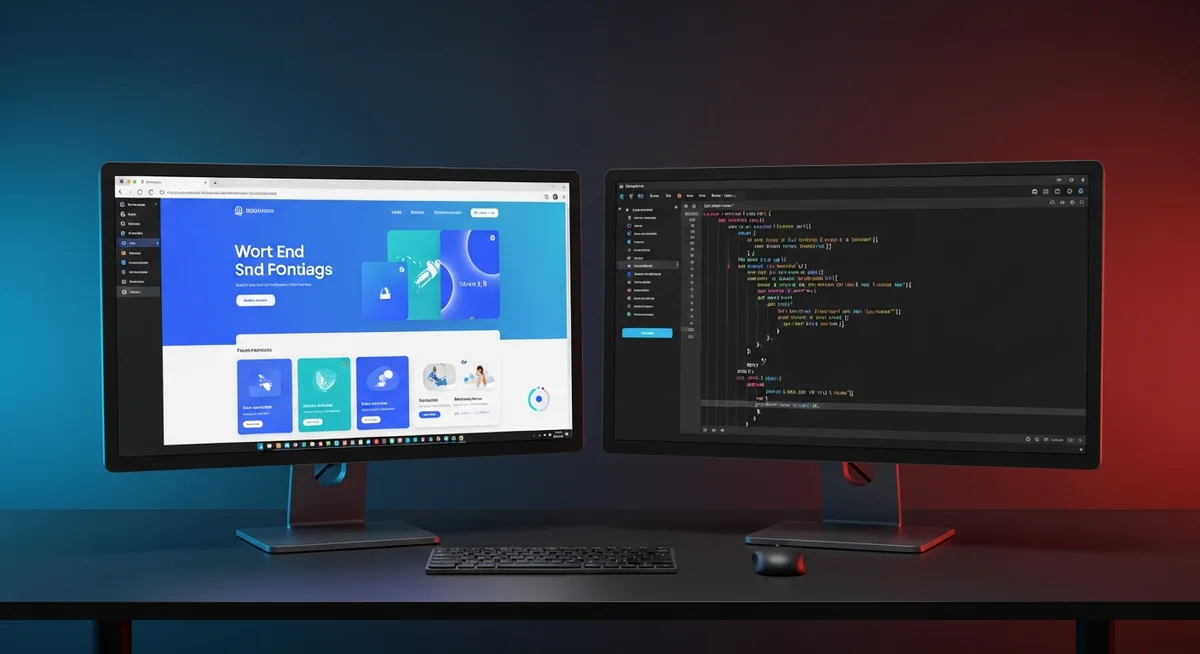
Front-end development builds the interactive, visual interface users touch, while back-end development powers the server, database, and logic that run behind the scenes.
If you want a complete look at how websites operate, this front-end vs back-end development explained guide clarifies how these roles interact.
- Front-end developers spend 100% of their time on client-side layouts, accessibility, and visual performance.
- Back-end engineers manage databases and core server logic, commanding average salaries of $122,000 as of 2026.
- Full-stack engineers bridge the gap by writing code for both environments, managing entire applications from end to end.
Your choice between these career paths depends on whether you prefer visual design or logical database architecture.
Front-End vs Back-End Development Explained: What Is the Difference?
To understand modern web development, you must divide a website into what the user sees and what the server processes. The front-end consists of every visual element a visitor interacts with on their screen. The back-end consists of the server, application logic, and databases that store user records securely.
While a front-end engineer works with layouts, typography, and state management, a back-end engineer works with algorithms, API structures, and data queries. Both disciplines must coordinate closely to ensure a website functions quickly and reliably.
| Feature | Front-End (Client-Side) | Back-End (Server-Side) |
|---|---|---|
| Core Focus | User interface, visual design, interactivity | Data processing, business logic, security |
| Primary Languages | HTML, CSS, JavaScript | Python, PHP, Node.js, Go |
| Environment | Web browsers (Chrome, Safari, Firefox) | Web servers, cloud hosts, databases |
| Key Goal | Intuitive presentation and ease of use | Data integrity, speed, and platform safety |
Understanding Front-End Development (The Client-Side)
Front-end development manages the presentation layer of a website. When you load a webpage, your browser parses files written in HTML (HyperText Markup Language), CSS (Cascading Style Sheets), and JavaScript to render a functional interface. Front-end engineers focus heavily on accessibility, site load speed, and cross-device responsiveness.
According to documentation from the MDN Web Docs, clean client-side code is critical for assistive technologies like screen readers. Developers must structure their documents using semantic tags so that search engines and assistive software can interpret the content correctly. The visual design is then layered over this structural base to create a polished user experience.
Front-End Developer Key Responsibilities
- Building responsive layouts: Designing pages that automatically scale to look correct on mobile phones, tablets, and desktop displays.
- Optimizing performance: Minimizing file sizes and optimizing script loading patterns to lower bounce rates.
- Ensuring cross-browser compatibility: Testing that styles and scripts execute identically across modern web engines.
- Implementing accessibility standards: Aligning website elements with international standards to support users with diverse abilities.
Front-End Programming Languages and Frameworks
- HTML: The foundation of all web documents, establishing text, links, and layout elements.
- CSS: The styling language used to control colors, typography, spacing, and grid arrangements.
- JavaScript: The logic layer that drives user-side interactivity, from modals to complex data fetch tasks.
- React and Vue: Modern visual frameworks that let developers build modular UI (User Interface) components.
- Tailwind CSS: A utility-first styling tool that speeds up stylesheet authoring directly inside the layout files.
Understanding Back-End Development (The Server-Side)
Back-end development runs behind the scenes on a remote server. When a visitor performs an action like logging in or purchasing an item, the front-end sends a message to the back-end to execute the request. The server-side code handles verification, processes the request against the database, and returns the result to the browser.
Security is the highest priority for server-side engineers. Under modern privacy policy page guidelines, back-end teams must protect personal identifying information through encryption and secure transport. If a server-side application is poorly constructed, data breaches can expose sensitive customer data.
Back-End Developer Key Responsibilities
- Managing databases: Organizing, storing, and retrieving information efficiently using robust schema designs.
- Developing APIs: Building Application Programming Interface systems that allow different services to communicate.
- Securing user sessions: Creating authentication logic that verifies user identities safely during active sessions.
- Configuring servers: Maintaining hosting environments and deployment pipelines to keep systems online.
Back-End Programming Languages, Frameworks, and Databases
- Node.js: A popular JavaScript runtime environment that lets developers write back-end code in JavaScript.
- Python: A highly readable language commonly paired with the Django or Flask frameworks for rapid development.
- PHP: The foundational language powering major systems, including the open-source software managed by WordPress.org.
- PostgreSQL and MongoDB: Robust database systems used to store relational or document-based datasets securely.
How Do the Front-End and Back-End Work Together?
Web applications function through a continuous request-response loop between the browser and the server. When you submit a search query on a site, your browser translates that action into an API (Application Programming Interface) request. This network packet travels across the internet to the server, where the back-end application processes it.
The back-end server runs queries against its database, formats the retrieved information, and sends a response back to the browser. Once the browser receives this payload, the client-side JavaScript updates the user interface dynamically. This separation of concerns allows developers to optimize the visual performance independently of heavy database processes.
For example, a typical modern fetch request looks like this simple JavaScript pattern:
fetch('https://api.example.com/data')
  .then(response => response.json())
  .then(data => {
    document.getElementById('display').innerText = data.message;
  });
This snippet demonstrates how the front-end requests information from the server-side API, then updates a specific layout element once the data arrives.
What Is Full-Stack Development?
Full-stack development represents the intersection of both fields, requiring expertise on both the client-side and server-side. A full-stack engineer can build the visual elements that users see, while also designing the underlying database structures. This comprehensive skillset is highly valued by startups and small teams that require agile development capabilities.
Working across the entire stack requires a developer to master diverse tools. While full-stack developers might not always specialize as deeply into database indexing as dedicated back-end specialists, they understand how to link systems together effectively. This dual capability makes them excellent communicators who can bridge technical divides within larger engineering organizations.
Front-End vs. Back-End: Salary and Career Outlook
Both disciplines offer strong career prospects, but compensation and demand vary based on specialization. Back-end roles often command slightly higher starting salaries due to the complexity of managing server security and data architectures. However, skilled front-end developers with strong framework expertise remain in high demand as companies focus on user retention.
According to current market data for 2026, salary expectations for both tracks remain competitive across the technology sector. The table below outlines the compensation trends and typical career trajectories for modern developers.
| Role Type | Average US Salary (2026) | Relative Job Demand | Key Career Trajectory |
|---|---|---|---|
| Front-End Developer | $108,000 | Very High | UI Architect, UX (User Experience) Engineer |
| Back-End Developer | $122,000 | High | Systems Architect, DevOps Specialist |
| Full-Stack Developer | $118,000 | Very High | Technical Lead, Engineering Manager |
Keep in mind that software versions, hosting prices, and regional salaries change frequently, so you should check local job boards for current rates.
How to Choose: Should You Learn Front-End or Back-End?
Deciding which path to pursue depends on your natural strengths, work preferences, and career goals. Both fields require analytical skills, but they apply those skills in different environments. Before choosing, review our legal compliance notice for terms regarding educational resources on ArtHack, then consider the following points.
- Choose front-end if: You enjoy visual design, want to see immediate feedback on your screen when you write code, and care deeply about the user interface.
- Choose back-end if: You like solving abstract logical puzzles, prefer working with data structures, and enjoy optimization problems without worrying about visual aesthetics.
- Choose full-stack if: You want a holistic understanding of how websites function and want to build independent software products from scratch.